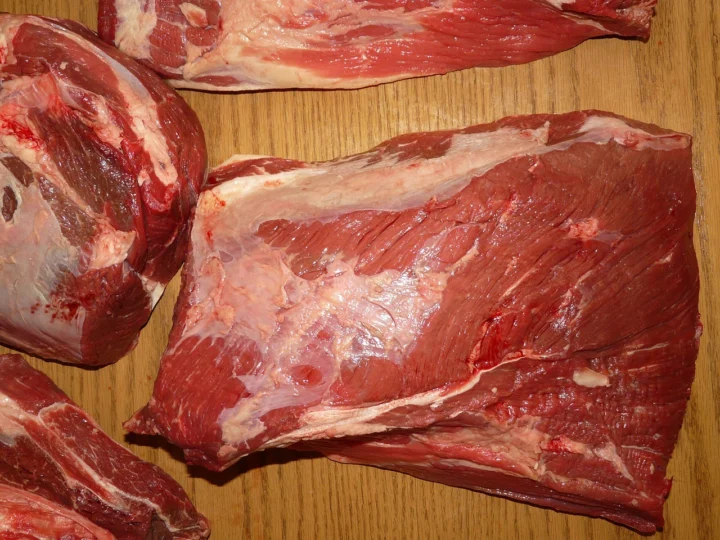
Short answer: Chuck roast is better for stew because it has more marbling and connective tissue, which breaks down during long, slow cooking into rich flavor and tender meat. Round roast is much leaner, so it often turns dry or tough in stew unless you add extra fat, use low heat, and slice it thinly.
Key takeaways
- Chuck wins on flavor and tenderness.
- Round roast needs fat help.
- Cook low and slow for both.
- Brown beef before simmering.
- Cut against the grain.
- Round works for leaner stews.
What you will find here
The real difference between chuck roast and round roast for stew comes down to fat, connective tissue, and how each cut responds to long, slow cooking. Chuck roast is the better choice for most stews. It has more marbling and collagen, which melt into the liquid over time, giving you tender, deeply beefy bites. Round roast is much leaner and can turn dry or tough if you treat it the same way.
What Is Chuck Roast?
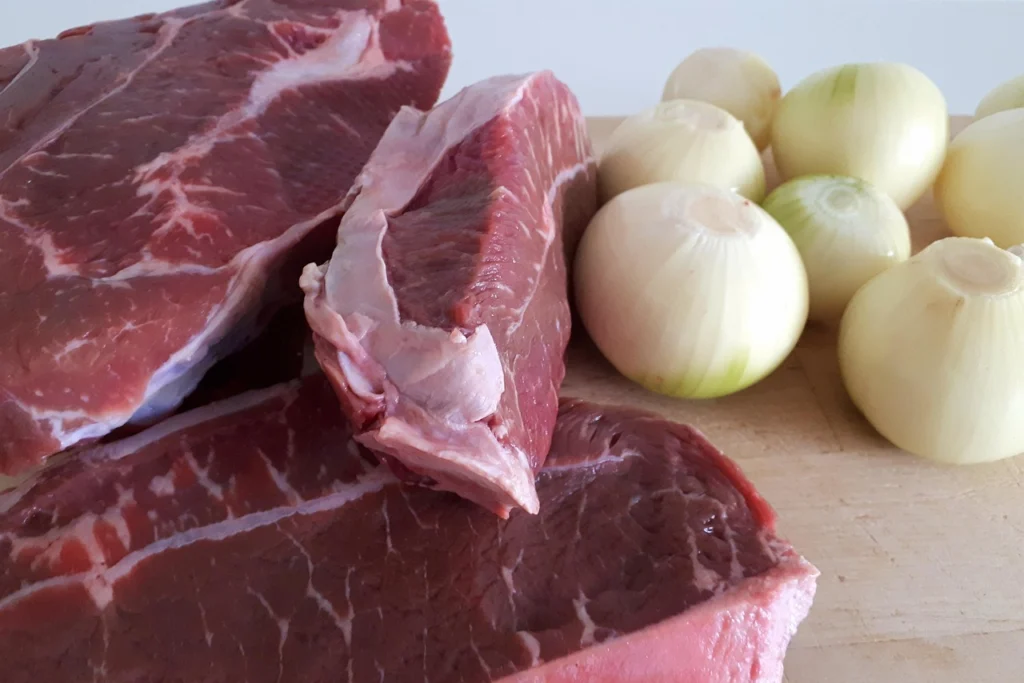
Chuck roast comes from the shoulder area of the cow, a heavily worked muscle group. That means it’s full of connective tissue and intramuscular fat—the exact things that make stew meat succulent. When you simmer chuck for a few hours, that collagen breaks down into gelatin, which thickens the broth slightly and coats each piece of meat with a silky texture.
The flavor is robust and beefy, not gamey. It holds up to bold seasonings like smoked paprika, Worcestershire sauce, tomato paste, and red wine. Because of that natural fat, chuck is forgiving. If you accidentally let the pot go 30 minutes too long, the meat often stays moist rather than turning to sawdust.
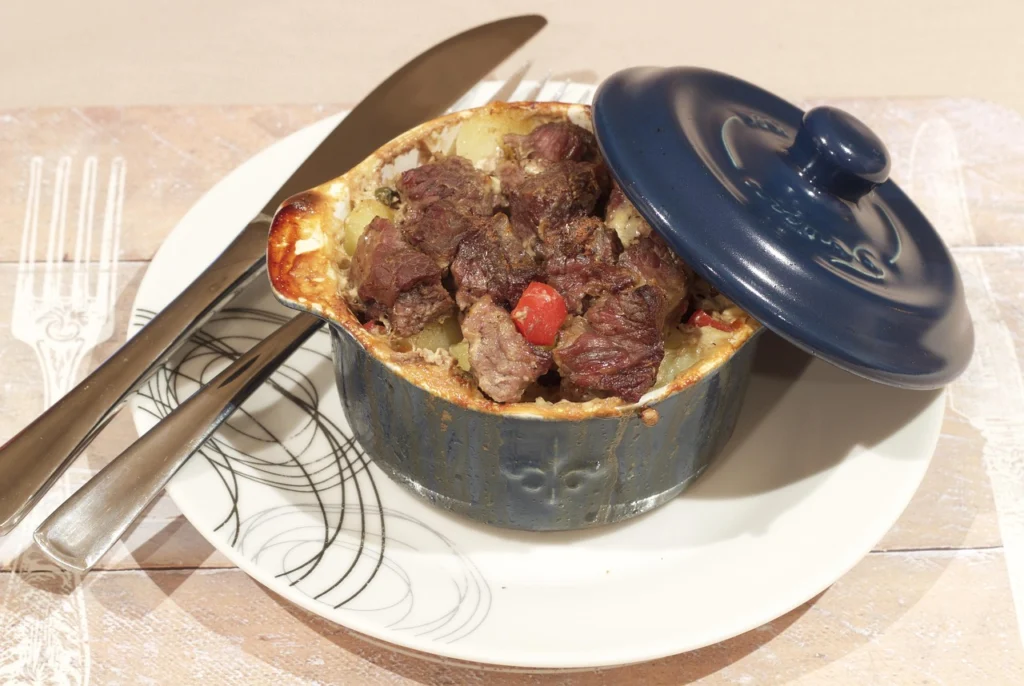
For most home cooks, chuck roast is the safe, dependable answer when a recipe simply says “beef stew meat.” Look for a piece with white streaks running through the red muscle. Those streaks are intramuscular fat, and they translate directly into tenderness after braising.
What Is Round Roast?
Round roast comes from the hind leg of the cow, another hard-working area. But unlike chuck, the round has very little internal fat. It’s a lean, dense cut with long muscle fibers and minimal marbling. You’ll often see it sold as top round, bottom round, or eye of round, and it’s typically cheaper per pound than chuck.
That leanness is both an advantage and a problem. Round roast is lower in saturated fat, which some cooks prefer. But without fat to lubricate the meat fibers, slow-cooked round can seize up and become dry, stringy, or tough. It doesn’t have the same collagen-to-gelatin conversion as chuck, so the texture never quite reaches that melt-in-your-mouth stage.
If you want to use round roast in stew, you need to adjust your approach. Cut it into uniform, bite-sized pieces. Brown it quickly over high heat to create a crust. Then simmer it gently—never a rolling boil—and check for doneness earlier than you would with chuck. Round roast often works better in stews with a shorter cooking window, around 1.5 to 2 hours, rather than all-day slow cooker recipes.
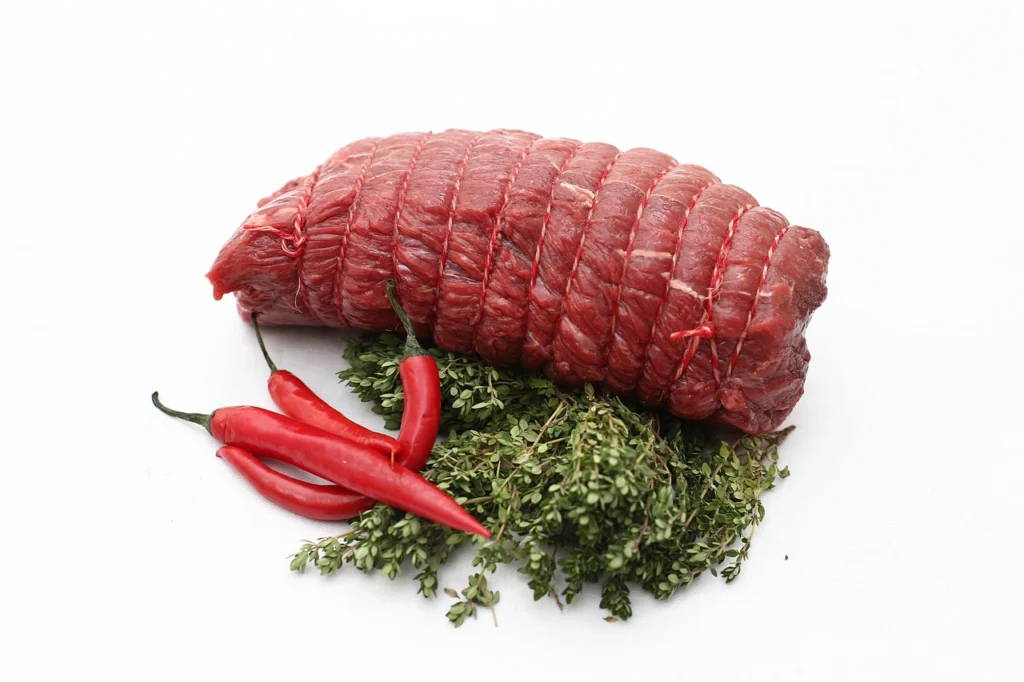
Chuck Roast vs Round Roast: Key Differences for Stew
Here’s a side-by-side look at how these two cuts behave in the pot.
| Characteristic | Chuck Roast | Round Roast |
|---|---|---|
| Fat content | Moderate to high marbling | Very lean, little marbling |
| Connective tissue | Abundant collagen | Minimal collagen |
| Flavor after stewing | Rich, deep, beefy | Milder, cleaner beef taste |
| Texture after stewing | Tender, shreddable, moist | Firm, sliceable, can be dry |
| Best cooking window | 2.5 to 4 hours | 1.5 to 2.5 hours |
| Typical price per pound | Mid-range | Often lower than chuck |
| Forgiveness level | Very forgiving | Less forgiving |
One thing the table doesn’t show: chuck roast shrinks more during cooking because of the fat rendering out. Round roast holds its size better but can become denser. If you’re feeding a crowd and want the meat to stretch, round might look like the better value. But if you want every bite to taste rich and tender, chuck is worth the extra few dollars.
How to Cook Chuck Roast for the Best Stew
Start with a well-marbled chuck roast, about 2 to 3 pounds. Trim any large, hard chunks of exterior fat, but don’t over-trim. That fat adds flavor to the stew liquid.
Cut the roast into 1.5 to 2-inch cubes. If some pieces are smaller, they’ll cook faster and may start to shred before the larger chunks are done. Try to keep them uniform.
- Pat the beef dry with paper towels. Moisture is the enemy of browning.
- Heat a heavy pot or Dutch oven over medium-high heat with a tablespoon of neutral oil.
- Brown the beef in batches, leaving space between pieces. Crowding steams the meat instead of searing it.
- Set the browned meat aside. Add diced onions, carrots, and celery to the same pot to pick up the browned bits.
- Return the beef to the pot with broth, crushed tomatoes, or red wine. Scrape the bottom of the pot.
- Simmer gently on the stovetop or in a 300°F oven for 2.5 to 3.5 hours, until the meat pulls apart with a fork.
- Add potatoes or other quick-cooking vegetables in the final 45 minutes.
If you want even deeper flavor, read this guide on how to brown beef for stew so every bite tastes rich. Proper browning makes a bigger difference than any seasoning trick.
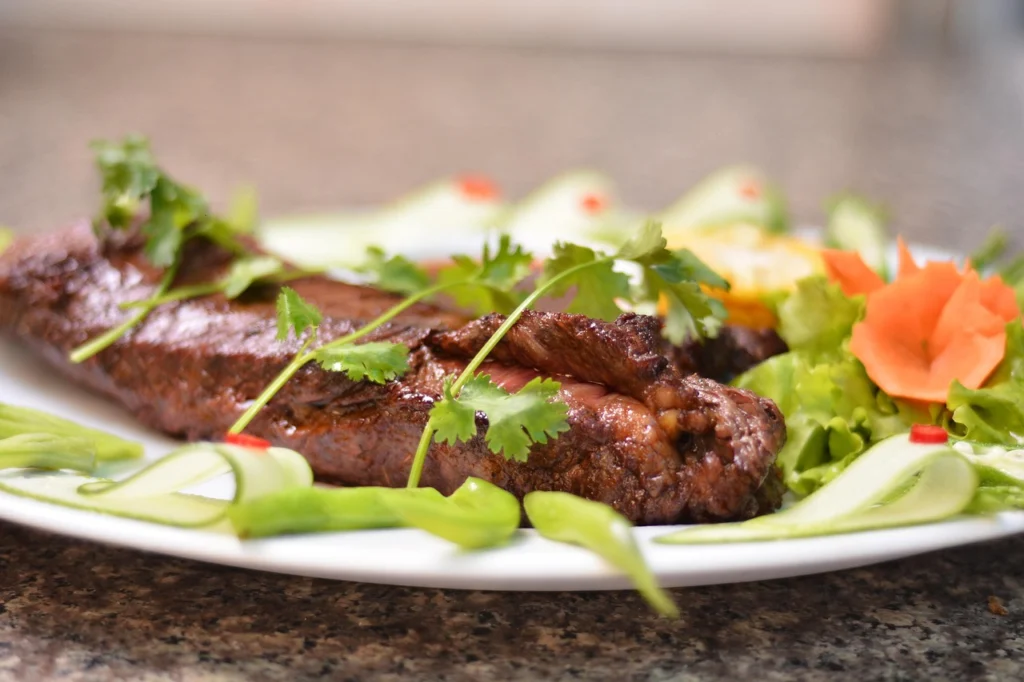
Can You Make Round Roast Tender in Stew?
Yes, with the right technique. Round roast won’t ever be as melt-in-your-mouth as chuck, but you can get a pleasant, firm-tender result if you respect its limitations.
Cut Against the Grain
Round roast has long muscle fibers. If you slice or cut with the grain, those fibers remain long and tough no matter how long you simmer. Look for the direction of the muscle lines and cut perpendicular to them. This shortens the fibers so your teeth can break them apart more easily.
Cook Low and Slow—But Not Too Long
Round roast needs heat to break down its fibers, but too much time makes it dry. Use a gentle simmer, not a boil. Check for tenderness after about 1.5 hours. If the meat resists a fork, give it more time, but stop as soon as it’s fork-tender. Longer isn’t always better with lean cuts.
Add Extra Fat
Since round roast lacks fat, borrow some from other ingredients. Cook the beef in a little bacon fat or olive oil. Add a pat of butter to the stew at the end. Or include a piece of smoked ham hock or a few strips of bacon during simmering. These fats coat the meat’s exterior and improve mouthfeel even if they can’t penetrate the muscle fibers.
Slice or Shred Before Serving
Instead of serving round roast as large chunks, try shredding it with two forks after cooking. The increased surface area soaks up more stew liquid, masking any dryness. A shredded round roast in a thick, flavorful broth can actually be quite good.
When to Choose Chuck vs Round for Stew
Go with chuck roast when you want a classic, rich, tender beef stew. It’s the best choice for long braises, Dutch oven cooking, and slow cooker recipes that run all day. The high collagen content means it practically bastes itself from the inside as it cooks.
Choose round roast when you want a leaner stew, when you’re watching saturated fat intake, or when you’re making a stew with a shorter cooking time and plan to slice the beef rather than shred it. Round also works well in broth-based soups where a clean, beefy flavor is more important than richness.
If you’re undecided, buy chuck. The difference in cost is usually small, but the difference in texture and flavor after three hours in the pot is significant. A slightly fattier stew is easier to fix—just skim the surface or chill overnight and lift off the solidified fat—than a dry, tough round roast.
Common Mistakes to Avoid with Both Cuts
Don’t skip browning. That golden crust on the meat adds a layer of flavor that simmering alone can’t produce. It also leaves browned bits on the bottom of the pot, which dissolve into the liquid and deepen the stew’s color and taste.
Don’t boil the stew. A hard, rolling boil will make even chuck roast tough by causing the muscle fibers to seize. Keep the liquid at a bare simmer—just a few bubbles breaking the surface. Use an oven set to 300°F or a slow cooker on low for the most even heat.
Don’t add all the vegetables at once. Potatoes, green beans, and peas turn to mush if they cook for as long as the beef needs. Add root vegetables halfway through and quick-cooking ones in the last 30 to 45 minutes.
Don’t cut the meat too small. One-inch pieces are the minimum. Smaller cubes cook faster but also dry out more easily. For chuck, 1.5 to 2 inches is ideal. For round, 1 to 1.5 inches helps keep the pieces tender without overcooking.
Final Word on Chuck Roast vs Round Roast for Stew
If you want stew that tastes like it came from a slow-simmered pot all day, use chuck roast. It rewards patience with falling-apart tenderness and a broth that tastes deeply of beef. Round roast has its place, especially in leaner or quicker stews, but it demands more care and gives less margin for error.
Try a side-by-side test once. Make the same stew with both cuts, using identical seasoning and cooking time. The difference in texture and richness will settle the debate for you faster than any guide can.
Frequently asked questions
Can I substitute round roast for chuck roast in beef stew?
Yes, you can substitute round roast for chuck roast, but the result will be leaner and less tender. Cut the round roast against the grain, brown it well, and simmer it gently for a shorter time. Adding extra fat like bacon or butter helps compensate for the lack of marbling.
Which is more tender in stew, chuck or round roast?
Chuck roast becomes more tender in stew because it has more connective tissue and intramuscular fat. During slow cooking, the collagen in chuck breaks down into gelatin, giving the meat a soft, moist texture. Round roast is much leaner and often stays firmer and drier.
Is round roast cheaper than chuck roast?
Round roast is often cheaper per pound than chuck roast because it comes from a leaner, less marbled area of the cow. However, the savings may not be worth it if the stew ends up tough or dry. Chuck usually provides better value for flavor and tenderness.
How long should I cook round roast in stew?
Round roast typically needs 1.5 to 2.5 hours of gentle simmering in stew. Check for tenderness with a fork after about 90 minutes. Cooking it much longer can make the meat dry and stringy, especially if the liquid is boiling instead of simmering.
Can I use a slow cooker for chuck roast stew?
Chuck roast works very well in a slow cooker. Cook it on the low setting for 7 to 8 hours or on high for 4 to 5 hours. The low, steady heat gives the collagen plenty of time to break down, resulting in tender, flavorful beef.
Does round roast get more tender the longer you cook it?
Not necessarily. With lean cuts like round roast, prolonged cooking can make the meat drier and tougher rather than more tender. Unlike chuck, round has little collagen to break down. It is better to cook round roast just until fork-tender and then stop.
Should I brown the beef before stewing?
Yes, browning the beef before stewing adds a deep, savory flavor that you cannot get from simmering alone. The browned crust and the browned bits left in the pot contribute richness to the stew liquid. Brown in batches over medium-high heat for the best results.
1 thought on “Chuck Roast vs Round Roast: Best Cut for Beef Stew”