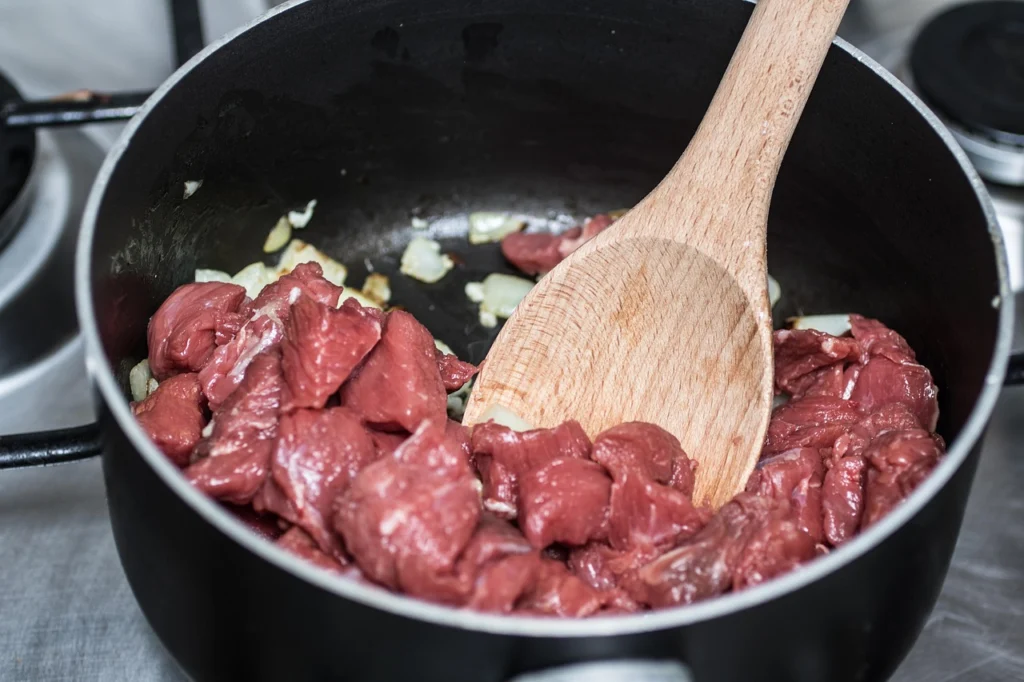
Short answer: To brown beef for stew, pat the cubes completely dry, heat a heavy pan with just enough oil to coat the bottom, and sear the meat in small batches without crowding. Let each piece develop a deep brown crust on all sides before removing it. That crust is where the rich flavor comes from.
Key takeaways
- Dry beef well before searing for a real crust.
- Don’t crowd the pan—brown in batches.
- High heat plus fat equals better browning.
- Scrape up fond for deeper stew flavor.
- Browning adds taste even before slow cooking.
- Skip the flour until after searing.
What you will find here
- What Does Browning Beef for Stew Actually Do?
- What Do You Need to Brown Beef Well?
- Step-by-Step: How to Brown Beef for Stew
- Common Browning Mistakes That Lead to Pale, Steamed Beef
- How Dark Should the Beef Get?
- Browning Beef vs. Skipping It: What’s the Difference?
- Can You Brown Beef in a Slow Cooker or Dutch Oven?
- Does the Cut of Beef Matter for Browning?
- What Should You Do with the Browned Bits in the Pan?
Browning beef for stew is the single biggest step you can take toward a pot that tastes deep, savory, and satisfying. When you sear the cubes in hot fat until they turn dark brown, you build a layer of caramelized flavor that slow cooking alone won’t create. The process takes an extra ten or fifteen minutes, but the difference in the final stew is enormous. Let’s walk through exactly how to brown beef for stew so every batch turns out rich, not steamed or dry.
What Does Browning Beef for Stew Actually Do?
Browning isn’t just for looks. When beef hits hot fat, a reaction called the Maillard reaction kicks in. Amino acids and sugars on the surface of the meat combine and transform, creating hundreds of new flavor compounds. Those compounds taste savory, toasty, and deeply beefy—flavors you simply can’t get from boiled or simmered meat alone.
Think of browning as building a flavor base. The dark crust on each cube becomes part of the stew’s overall taste. Bits that stick to the bottom of the pan, called fond, dissolve into the cooking liquid and season the broth. Skip the browning, and your stew will still be tender, but it will taste flat and one-dimensional. You can read more about the basics of building stew flavor in this introductory guide to hearty stews.
What Do You Need to Brown Beef Well?
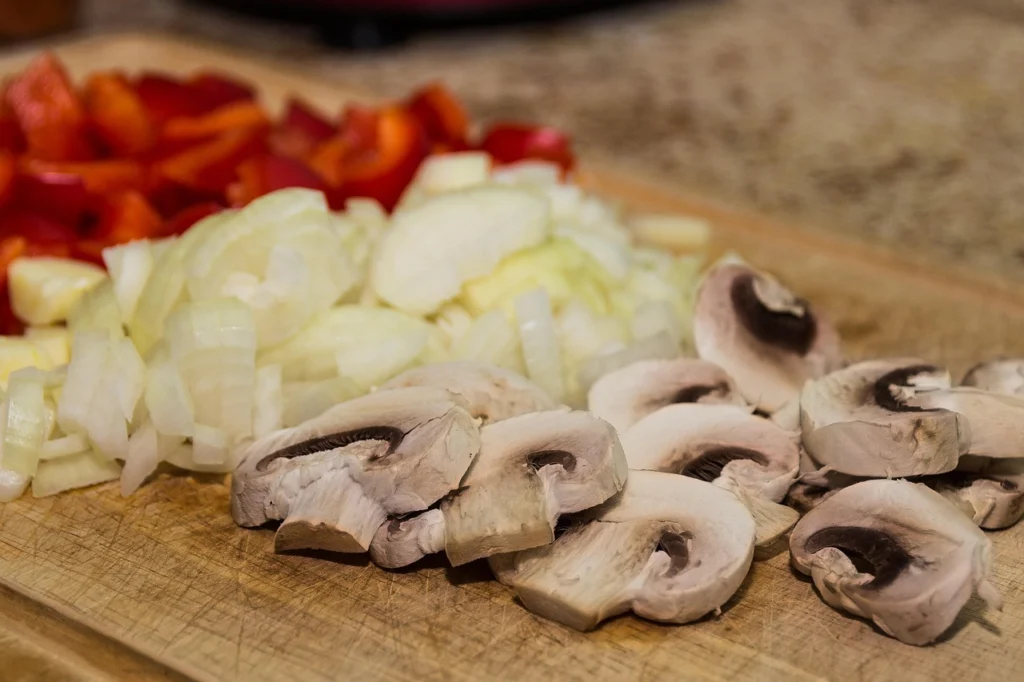
You don’t need fancy equipment. A heavy-bottomed skillet, Dutch oven, or cast iron pan works best because it holds heat evenly and allows the meat to sear without the temperature dropping too much. Thin, lightweight pans cool down too fast when you add the meat, which leads to steaming instead of browning.
For fat, choose an oil with a high smoke point. Canola, vegetable, grapeseed, or avocado oil all work well. Olive oil can brown beef, but it smokes at a lower temperature and can impart a slightly bitter note if overheated. You only need enough oil to coat the bottom of the pan—about one to two tablespoons for a large skillet.
A pair of tongs is the easiest tool for turning individual pieces, though a spatula works too. Have a clean plate or tray nearby for the browned meat. And don’t forget paper towels for drying the beef, which is the most important prep step.
Step-by-Step: How to Brown Beef for Stew
Follow these steps in order, and your beef will sear instead of steam.
- Cut the beef into even cubes. Aim for one to one and a half inches per side. Even sizing means even cooking and more surface area for browning.
- Pat every cube completely dry. Moisture on the surface of the meat turns to steam the moment it hits the hot pan. Steam prevents browning. Use paper towels and press firmly—dry beef is the secret to a real crust.
- Heat the pan over medium-high to high heat. Give it a few minutes to get properly hot. You should see a faint shimmer in the oil, but not smoke.
- Add oil and swirl to coat. Then add beef cubes in a single layer with space between each piece. Overcrowding drops the pan temperature and creates steam.
- Leave the beef alone for 2 to 3 minutes. Don’t poke, flip, or shake. Let the bottom side develop a deep brown crust. If you try to move a piece and it sticks, it isn’t ready yet.
- Turn each cube with tongs. Brown the second side, then continue turning until all sides are dark and crusty. This takes about 6 to 8 minutes per batch.
- Remove the browned beef to a plate. Repeat with remaining batches, adding a little more oil if the pan looks dry.
- Deglaze the pan if you like. Pour a splash of broth, wine, or water into the empty hot pan and scrape up the browned bits. Add this liquid to your stew pot for extra flavor.

Common Browning Mistakes That Lead to Pale, Steamed Beef
Even experienced cooks sometimes end up with gray cubes instead of dark brown ones. Here are the most common culprits and how to avoid them.
- Wet beef. Water on the surface must evaporate before browning can start. If the pan is crowded and the beef is wet, you get boiled meat. Dry it thoroughly.
- Overcrowded pan. When cubes touch, steam gets trapped between them. The meat cooks but never browns. Use a large pan or work in batches.
- Low heat. The pan needs to stay hot enough to sear. Medium heat might feel safer, but it won’t produce the dark crust. Crank it up to medium-high or high.
- Moving the meat too soon. Beef releases from the pan when the crust is ready. If you force it, the crust tears and stays in the pan. Wait for the meat to release naturally.
- Too much oil. You want a thin coating, not a pool. Excess oil makes the beef fry instead of sear and can leave the cubes greasy.
One note on flour: many old recipes call for dredging stew meat in flour before browning. The flour can help create a thicker stew later, but it also burns easily and can prevent a clean sear. For the richest flavor, brown naked cubes first, then add flour later as a thickener if your recipe calls for it.
How Dark Should the Beef Get?
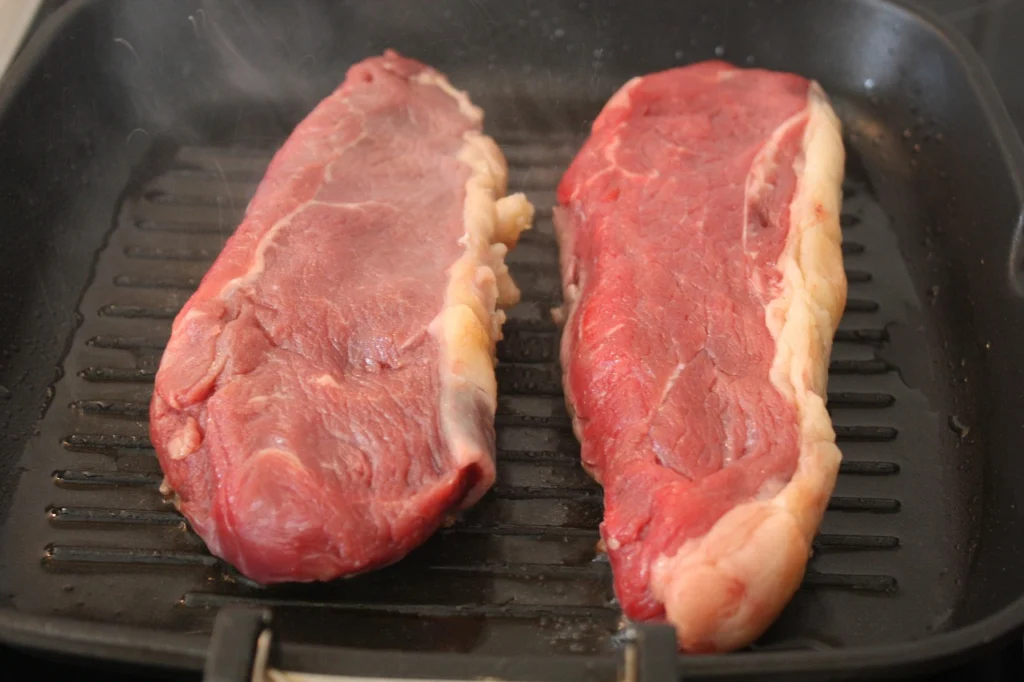
You’re looking for a deep brown color, like the crust on a well-seared steak. Some spots will be darker, almost mahogany, and that’s good. The darker the crust, the more flavor develops—up to a point. Black, charred bits taste bitter and acrid, so pull the beef off the heat if you see burning.
The interior should still be raw or just barely cooked. Browning isn’t meant to cook the beef through. The slow simmer in the stew liquid will finish the job gently. If you brown the cubes too long and they’re fully cooked, they can become dry or tough later.
Browning Beef vs. Skipping It: What’s the Difference?
If you’re short on time, you might wonder whether browning is worth it. Here’s a quick comparison.
| Factor | Browned Beef | Unbrowned Beef |
|---|---|---|
| Flavor depth | Rich, savory, caramelized | Mild, one-note, boiled |
| Broth color | Deep brown, glossy | Pale, grayish |
| Texture of crust | Pleasantly chewy, dark edges | Soft, uniform, no contrast |
| Preparation time | Adds 10–15 minutes | None |
| Overall satisfaction | Restaurant-quality stew at home | Flat, disappointing |
Browning isn’t just a chore—it’s the flavor engine of the dish. If you truly have no time, you can skip it, but don’t expect the same result. The stew will still be edible, but it won’t have the same savory richness that makes you go back for seconds.
Can You Brown Beef in a Slow Cooker or Dutch Oven?
You can’t brown beef properly in a slow cooker. The heat is too low and the environment traps moisture. The meat will steam and release liquid before any browning happens. For best results, always sear in a separate hot pan or in a Dutch oven on the stovetop before transferring to the slow cooker.
A Dutch oven is actually the ideal vessel for browning and then stewing. Heat the Dutch oven on the stovetop, sear the beef in batches, remove the meat, then add your aromatics and liquid to the same pot. The browned bits on the bottom will dissolve and flavor the entire dish. Fewer dishes, more flavor.
Does the Cut of Beef Matter for Browning?
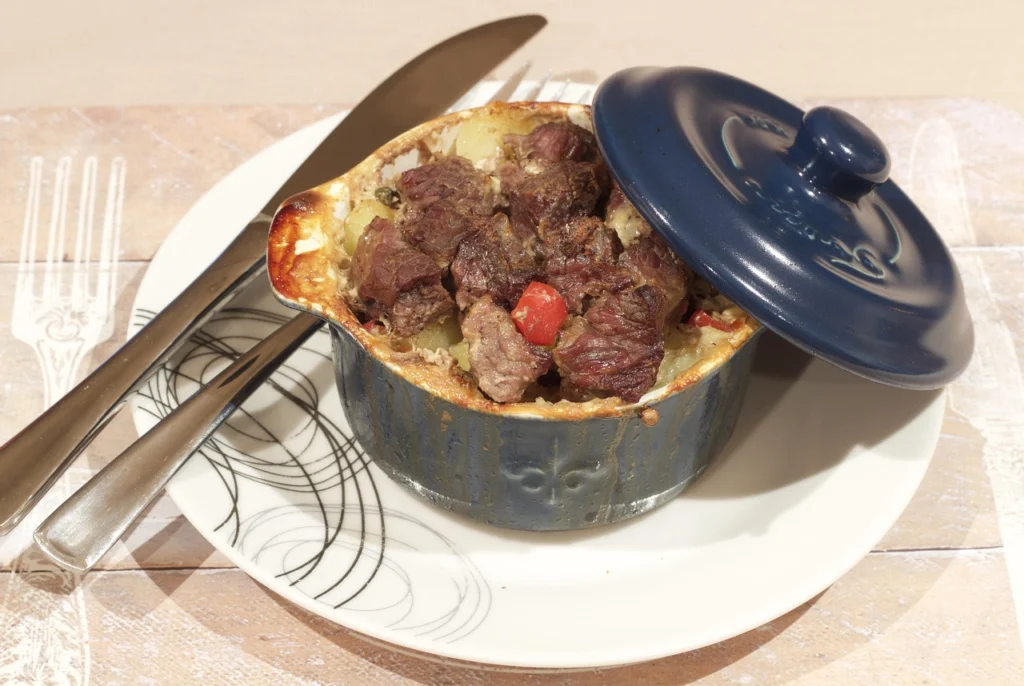
Yes, the cut affects how well the beef browns and how tender it becomes. Choose a tough, well-marbled cut like chuck, round, brisket, or short rib. These have enough fat and connective tissue to stay moist during long, slow cooking. Lean, tender cuts like sirloin or tenderloin will dry out and become stringy.
Chuck is the most common choice for stew because it has a good balance of meat, fat, and collagen. The fat renders during browning and adds flavor to the pan, while the collagen melts into the stew during simmering. Look for well-marbled pieces with some visible white streaks—that marbling equals flavor and tenderness.
What Should You Do with the Browned Bits in the Pan?
Those browned bits stuck to the bottom of the pan are called fond, and they’re pure flavor. Once all the beef is browned and removed, pour a small amount of liquid into the hot pan—broth, wine, beer, or even water—and scrape with a wooden spoon or spatula. The fond will dissolve into the liquid, creating a deeply flavored base.
Pour that deglazing liquid right into your stew pot. You can also brown onions, carrots, or tomato paste in the same pan before deglazing to build even more layers of flavor. The fond is not burnt food; it’s concentrated beef essence that will make your stew taste like it cooked all day.
Next time you’re prepping stew, give the beef the time and heat it deserves. A proper sear on every cube is the foundation of a pot that tastes rich, savory, and deeply satisfying. Your future self—and everyone at the table—will notice the difference.
Frequently asked questions
Do I need to flour beef before browning for stew?
No. Flour can burn easily and prevent a clean sear. For the richest flavor, brown naked cubes first, then add flour later as a thickener if your recipe calls for it. The meat will develop a better crust without the coating.
What is the best oil for browning beef?
Choose an oil with a high smoke point, such as canola, vegetable, grapeseed, or avocado oil. These oils stay stable at high heat and won’t smoke or impart off flavors. Olive oil can work but smokes at a lower temperature.
How long should I brown beef for stew?
Plan for 2 to 3 minutes per side, and about 6 to 8 minutes per batch total, depending on the size of your cubes and the heat of your pan. Brown in small batches so the meat sears instead of steaming.
Can I brown beef the night before making stew?
Yes, you can brown the beef up to a day ahead. Let it cool, then cover and refrigerate. Bring the meat to room temperature for about 20 minutes before adding it to the stew so it doesn’t cool down the pot too much.
Why is my beef turning gray instead of brown?
Gray beef usually means the pan was overcrowded, the meat was wet, or the heat was too low. Dry the beef completely with paper towels, use a larger pan or work in smaller batches, and keep the heat at medium-high to high.
Should I salt beef before browning?
Salt draws moisture to the surface of the meat, which can interfere with browning if done too far ahead. If you want to season before searing, do it right before the beef goes into the hot pan, or wait until after browning.
Can I brown frozen beef?
No, frozen beef releases too much water as it thaws in the pan, and the surface will steam instead of sear. Thaw the meat completely in the refrigerator, then pat it very dry before browning.
2 thoughts on “How to Brown Beef for Stew So Every Bite Tastes Rich”